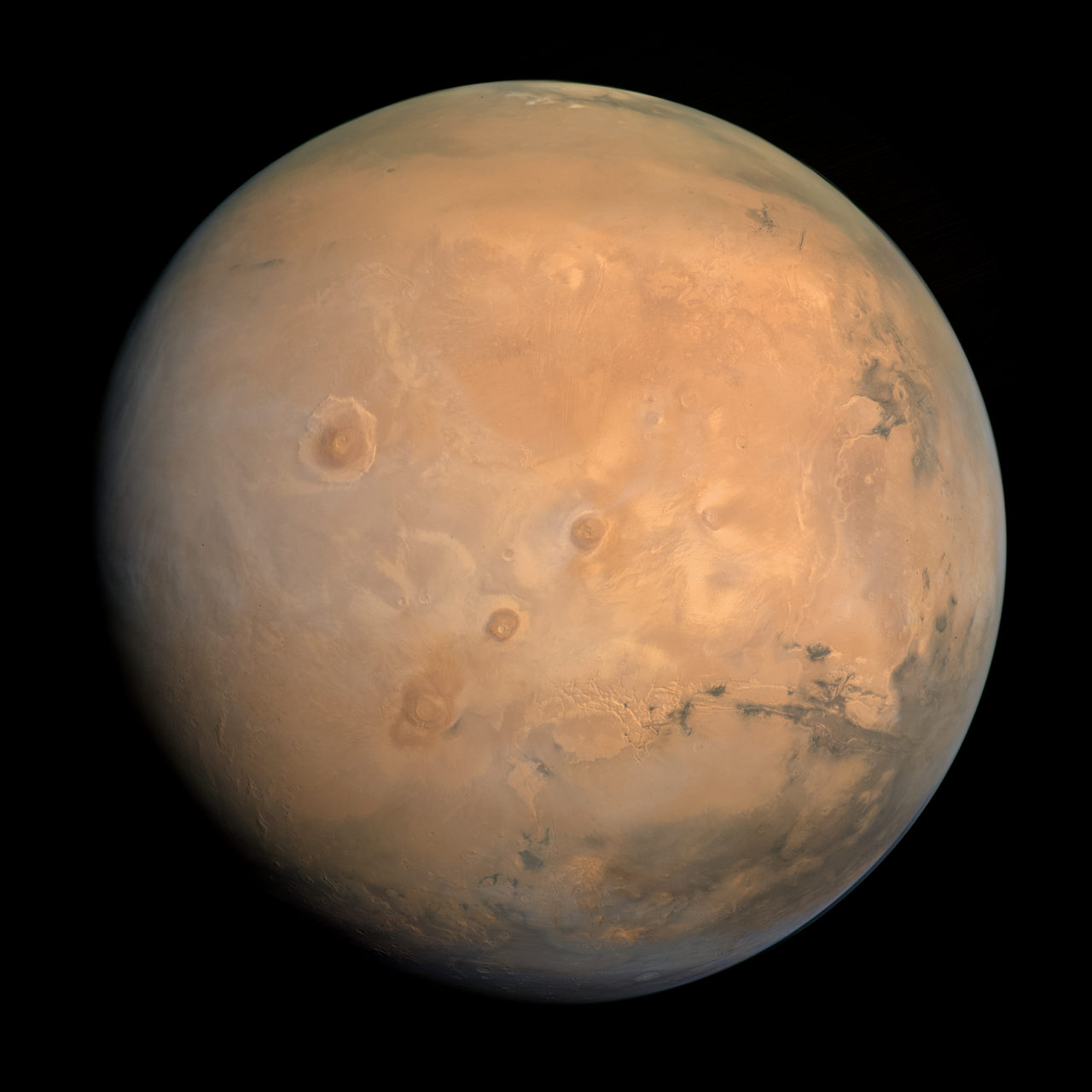
For centuries, the enigmatic red glow of Mars has captivated humanity, sparking questions about life beyond Earth and inspiring countless stories of alien civilizations. Visible from our home planet with the naked eye, Mars, the fourth planet from the Sun, has long been a beacon of fascination. Early astronomers, peering through rudimentary telescopes in the 18th and 19th centuries, mistook surface features for seas and even artificial canals, fueling speculation about intelligent Martian inhabitants. Today, after decades of intensive robotic exploration, our understanding of Mars is far more sophisticated, yet the fundamental questions persist: Was Mars once home to life? And could it still harbor microbial forms beneath its arid surface?
Mars: A Celestial Neighbor and Enduring Mystery
While early observations painted a picture of a planet not dissimilar to Earth, with apparent ice caps and seasons, modern science has revealed a harsher reality. Mars is a frigid, desiccated world, lacking a breathable atmosphere and a global magnetic field necessary to shield its surface from the Sun's relentless radiation. However, this wasn't always the case. A treasure trove of data from numerous space missions has irrevocably proven that billions of years ago, Mars was a very different place. Evidence of ancient river valleys, vast deltas, and extensive lakebeds strongly suggests that liquid water once flowed freely across its surface, creating conditions that could have been hospitable to life as we know it.
Scientists estimate that Mars possessed habitable conditions for at least some periods around 3 to 4 billion years ago. The crucial unanswered question is whether these warm, wet intervals lasted long enough for life to emerge and thrive, or if they were merely transient phases within a predominantly cold, dry existence. The dramatic transformation of Mars from a potentially life-supporting oasis to the cold, barren desert we observe today is a key area of study, offering profound insights into planetary evolution and the delicate balance required for life to persist. To delve deeper into this incredible planetary shift, read our article From Oasis to Desert: The Transformation and Mysteries of Mars.
The possibility of life on Mars today, however, has not been entirely dismissed. Scientists theorize that if life ever took hold, it might have retreated beneath the Martian surface. Here, protected from extreme radiation and temperatures, and potentially with access to subsurface water ice or liquid brine, microbial life could theoretically still flourish. Unraveling these mysteries holds the key to understanding our own origins and whether life is a common phenomenon in the cosmos or a precious rarity confined to Earth.
Decades of Robotic Exploration: Paving the Way for Humanity
Humanity's quest to understand Mars has led to more spacecraft being sent to the Red Planet than any other world beyond Earth. This ambitious journey began in the 1960s, with both the United States and the Soviet Union launching robotic probes. Initial attempts were met with failures, but a breakthrough came in 1965 when NASA’s Mariner 4 achieved the first successful flyby of Mars. Its images revealed a stark, cratered, and seemingly barren landscape, shattering earlier romantic notions of a vibrant, Earth-like world.
Subsequent Mariner missions refined this initial picture. Notably, Mariner 9, in 1971, became the first spacecraft to orbit another planet. It arrived during a colossal dust storm that enveloped nearly the entire planet, initially obscuring its surface. Once the dust settled, Mariner 9 astonished scientists by discovering Valles Marineris, an immense canyon system stretching thousands of kilometers – the largest in our Solar System. Furthermore, it spotted other dry riverbeds, deltas, and lakebeds, providing the first compelling evidence that liquid water had once carved features into the Martian landscape.
The mid-1970s marked another monumental leap with the NASA Viking landers. These were the first spacecraft to successfully land on Mars and operate for extended periods. The Viking missions carried sophisticated instruments designed to test the Martian soil for signs of life. While their results were ultimately inconclusive and did not provide clear evidence of extant life, they provided an unprecedented wealth of data about Martian geology, atmosphere, and surface chemistry, forever changing our perception of the Red Planet. The search for ancient water and life continues to this day, with missions like Perseverance and Curiosity actively drilling and analyzing Martian soil. You can learn more about these fascinating discoveries in our article, Unveiling Mars: The Quest for Life & Ancient Water Evidence.
Beyond the professional observatories and space agencies, the fascination with Mars resonates globally. Amateur astronomers and enthusiasts worldwide, from bustling cities to tranquil regions like Lot-et-Garonne in southwestern France, eagerly track Mars across the night sky. The visible red hue of Mars, Lot-et-Garonne skies permitting, has captivated observers for millennia, just as it has inspired countless scientific endeavors. Whether through local astronomy clubs or simply stargazing from a rural property, the connection to Mars transcends geographical boundaries, fostering a shared human curiosity about our celestial neighbor. This regional engagement highlights how every part of the world contributes to the collective human journey of understanding the cosmos.
The Quest for Answers: Unraveling Mars's Secrets
The array of robotic explorers on and around Mars today continues to send back invaluable data, slowly piecing together the planet's complex history. Rovers like Curiosity and Perseverance are meticulously studying Martian geology, searching for organic molecules, and analyzing rock samples that might one day be returned to Earth. Orbiters are mapping the planet in unprecedented detail, scrutinizing its atmosphere, and searching for subsurface ice and potential volcanic activity.
Key scientific questions driving current and future missions include:
- The Fate of Mars's Water: Where did the vast amounts of liquid water go? Was it lost to space, locked away underground as ice, or absorbed into minerals?
- Atmospheric Evolution: How did Mars lose its dense, protective atmosphere, leading to its current thin, unbreathable state? Understanding this could inform our knowledge of climate change on Earth and other planets.
- The Biosignature Hunt: What are the definitive signs of past or present life? Scientists are developing more sensitive instruments to detect biosignatures, such as complex organic molecules or isotopic anomalies.
- Preparing for Human Missions: Future missions are focused on understanding the challenges and risks of sending astronauts to Mars, including radiation exposure, resource utilization (like generating oxygen from the Martian atmosphere), and long-term habitat development.
The ultimate goal is not just to understand Mars itself, but to leverage its story to better comprehend the origins and future of life in the universe. The insights gained from Mars exploration have profound implications for astrobiology and the search for exoplanets beyond our solar system.
Practical Engagement: How to Connect with Mars Exploration
You don't need to be an astronaut or a scientist to engage with Mars exploration. Here are a few ways:
- Observe Mars: On clear nights, especially when Mars is closest to Earth (during its opposition), you can spot its distinctive red glow with the naked eye. With a decent telescope, you might even discern its polar ice caps or prominent dark features.
- Follow the Missions: Space agencies like NASA and ESA provide extensive public outreach. Websites, social media channels, and live streams offer real-time updates, stunning images, and scientific discoveries from ongoing missions.
- Educational Resources: Explore documentaries, books, and online courses about Mars. Many universities and educational platforms offer free or low-cost learning opportunities about planetary science.
- Join Astronomy Clubs: Local astronomy clubs are excellent places to learn from experienced observers, use powerful telescopes, and connect with fellow space enthusiasts, whether you're in a major city or a quieter region like Lot-et-Garonne.
The Future is Martian: Landings and Beyond
The current era of Mars exploration is undeniably focused on preparing for human footsteps on the Red Planet. Agencies are developing technologies for long-duration space travel, advanced life support systems, and techniques for living off the land, such as extracting water and oxygen from Martian resources. While the timeline remains fluid, the vision of astronauts setting foot on Mars, establishing a sustained human presence, and furthering scientific discovery directly from the Martian surface is no longer the stuff of pure science fiction, but a tangible goal for the coming decades. This bold endeavor promises not only to expand our scientific knowledge but also to redefine humanity's place in the cosmos.
From early telescopic observations that mistakenly identified canals to the sophisticated robotic missions uncovering evidence of ancient oceans, Mars has consistently challenged and expanded our understanding of planetary evolution and the potential for life beyond Earth. The journey of exploration has been long and arduous, marked by both triumphs and setbacks, but the allure of the Red Planet remains as potent as ever. As we continue to send advanced probes and prepare for human landings, Mars stands as a testament to humanity's insatiable curiosity and our enduring quest to unravel the universe's deepest secrets. The answers we seek on Mars will not only illuminate its past but also profoundly shape our future among the stars.