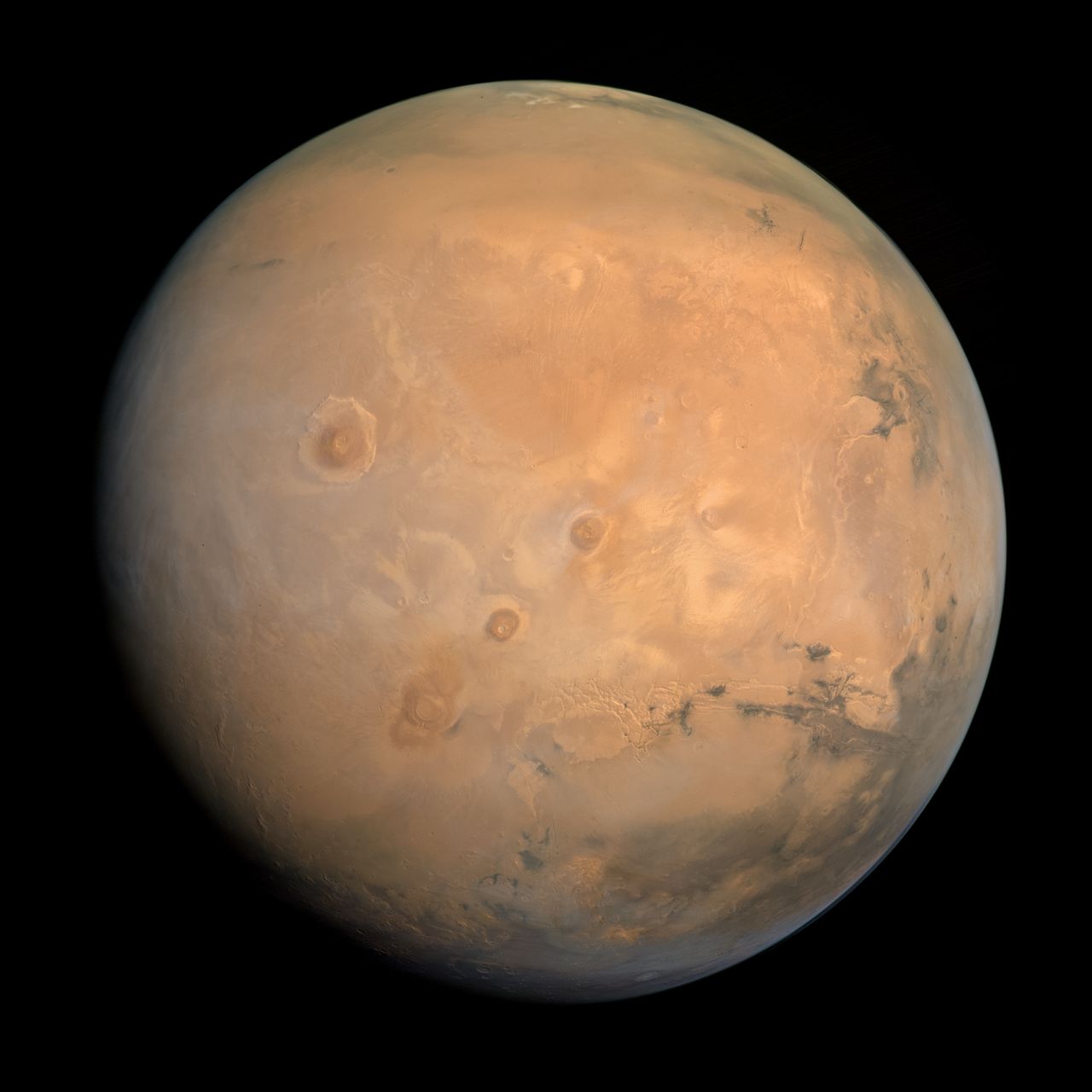
Unveiling Mars: The Quest for Life & Ancient Water Evidence
For millennia, the allure of the Red Planet has captivated humanity. Glimmering in the night sky with its distinctive reddish hue, Mars has fueled imaginations, inspired myths, and driven scientific inquiry. From ancient civilizations associating its color with gods of war to 19th-century astronomers sketching elaborate canal networks, the question of whether life exists beyond Earth has often found its focal point on our closest planetary neighbor. Today, thanks to decades of relentless robotic exploration, we have moved beyond speculation to a concerted scientific quest, piecing together a fascinating narrative of a once-wet world and the tantalizing possibility of present-day subterranean life.
The Enduring Fascination with the Red Planet
Visible to the naked eye, Mars is one of the brightest objects in our night sky, typically outshone only by Venus and Jupiter among the planets. Its striking crimson tint, caused by iron oxides on its surface, led ancient cultures to name it after their deities of war – a legacy we carry forward with the Roman god Mars. This long-standing familiarity gave way to more detailed observations with the advent of telescopes. In the 18th and 19th centuries, astronomers like Giovanni Schiaparelli and Percival Lowell observed features they mistook for seas, vegetation, and even vast artificial canals, leading to widespread belief in intelligent Martian civilizations. This era, though based on misinterpretations, profoundly shaped public interest and laid the groundwork for future space exploration.
Our modern understanding, however, paints a different picture. Space missions have revealed Mars as a cold, dry desert world with a thin, unbreathable atmosphere and no global magnetic field to protect it from the Sun's harsh radiation. Yet, this stark reality only deepens the mystery, as growing evidence suggests Mars wasn't always this way. It’s a story of profound transformation, hinting at a past that could have been remarkably similar to Earth’s early history.
Tracing Water: The Key to Mars' Habitable Past
The quest for life on Mars is inextricably linked to the search for water. Early missions, initially revealing a barren landscape, began to hint at a wetter past. NASA's Mariner 9, defying a global dust storm in 1971, emerged to discover Valles Marineris, a colossal canyon system far larger than Earth's Grand Canyon. More importantly, it uncovered dry river valleys and other erosional features. Subsequent missions, including orbiters and rovers, have added layer upon layer of evidence:
- Ancient Riverbeds and Deltas: Images of intricate networks resembling river deltas and lakebeds strongly suggest persistent liquid water flow on the surface billions of years ago.
- Mineral Signatures: Rovers have identified minerals like hematite, goethite, and clay minerals, which typically form in the presence of water. For instance, the Opportunity rover found "blueberries" – spherical concretions rich in hematite – indicating an ancient watery environment.
- Polar Ice Caps and Subsurface Ice: Mars has polar ice caps composed of both water ice and frozen carbon dioxide. Ground-penetrating radar has also revealed extensive subsurface water ice, particularly in the mid-latitudes, suggesting vast frozen reservoirs.
- Recurrent Slope Lineae (RSL): These dark streaks appearing on Martian slopes in warmer seasons have been interpreted as potential evidence of contemporary briny water flows, though their exact formation mechanism is still debated.
Scientists estimate that Mars was hospitable to life as we know it for at least some periods around 3 or 4 billion years ago. During this epoch, it likely possessed a thicker atmosphere and sustained liquid water on its surface. The critical question remains: was this warm, wet period long enough for life to emerge and flourish, or were these merely brief, isolated intervals? Understanding From Oasis to Desert: The Transformation and Mysteries of Mars is crucial to deciphering the planet's potential for life.
The Search for Life: From Surface Scans to Subterranean Clues
The ambition to find life on Mars intensified with the NASA Viking landers in the mid-1970s. These were the first spacecraft to successfully land on Mars and carry out experiments designed to detect metabolic activity in Martian soil. While initial results from some experiments were intriguing, they ultimately yielded no clear, unambiguous evidence of biological activity, leading scientists to conclude that the surface environment was likely sterile.
However, this didn't deter the quest. With newfound knowledge of Mars' past habitability, the strategy evolved to "follow the water" and search for biosignatures rather than active life itself. Today, the focus has largely shifted to subsurface environments. Why? Because beneath the Martian surface, any potential life would be shielded from:
- Harmful Radiation: The planet's thin atmosphere and lack of a global magnetic field expose the surface to high levels of solar and cosmic radiation.
- Extreme Temperatures: Surface temperatures fluctuate wildly, often dropping to -100°C (-148°F) at night.
- Lack of Liquid Water: The low atmospheric pressure means liquid water quickly boils or freezes on the surface.
Subterranean caves or pockets of rock could offer stable temperatures, protection from radiation, and access to any existing pockets of liquid water, potentially fueled by geothermal activity. This makes them prime targets for future astrobiological investigations. The Mars Perseverance rover, for instance, is not only searching for signs of ancient microbial life but also collecting samples for eventual return to Earth, where they can be analyzed with far more sophisticated instruments than can be sent to Mars. The answers gleaned from these samples could profoundly impact our understanding of the origins of life and our place in the cosmos.
A Legacy of Exploration: Humanity's Martian Endeavor
Humanity has sent more robotic emissaries to Mars than to any other planet beyond Earth. The journey began with a series of failures by both the United States and the Soviet Union in the 1960s, a testament to the immense challenges of interplanetary travel. But perseverance paid off. In 1965, NASA's Mariner 4 achieved a historic milestone, becoming the first spacecraft to successfully fly by Mars, transmitting the first close-up images of its cratered surface.
Since then, a continuous stream of orbiters, landers, and rovers has transformed our understanding of the Red Planet. From the groundbreaking Viking missions to the long-lived Spirit and Opportunity rovers, the highly successful Curiosity rover, and the advanced Perseverance rover, each mission has added critical pieces to the Martian puzzle. Orbiters like the Mars Reconnaissance Orbiter (MRO) provide high-resolution mapping, while landers like InSight delve into the planet's interior. You can learn more about Exploring Mars: Decades of Missions, Discoveries, and Future Landings and the incredible technological feats involved.
Practical Tip: Spotting Mars in the Night Sky
Mars is relatively easy to spot! Look for a bright, reddish-orange "star" that doesn't twinkle as much as actual stars. Its brightness and visibility vary depending on its position in orbit relative to Earth. When Earth and Mars are closest, during an "opposition," it appears at its brightest and largest in telescopes. Check local astronomy guides or apps for optimal viewing times in your area.
Conclusion: The Ongoing Journey to Uncover Martian Secrets
The quest to unveil Mars is far from over. From a celestial beacon in ancient skies to a target for modern scientific inquiry, Mars continues to challenge and inspire us. The evidence of ancient water, the tantalizing possibility of subsurface life, and the ongoing efforts to understand its dramatic climatic transformation underscore its importance in the search for extraterrestrial life and the origins of our own. The answers Mars holds could profoundly impact our understanding of the universe and our place within it, teaching us whether life is a unique phenomenon confined to Earth or a common occurrence waiting to be discovered across the cosmos.