The Red Planet's Enduring Enigma: From Once-Watery World to Arid Frontier
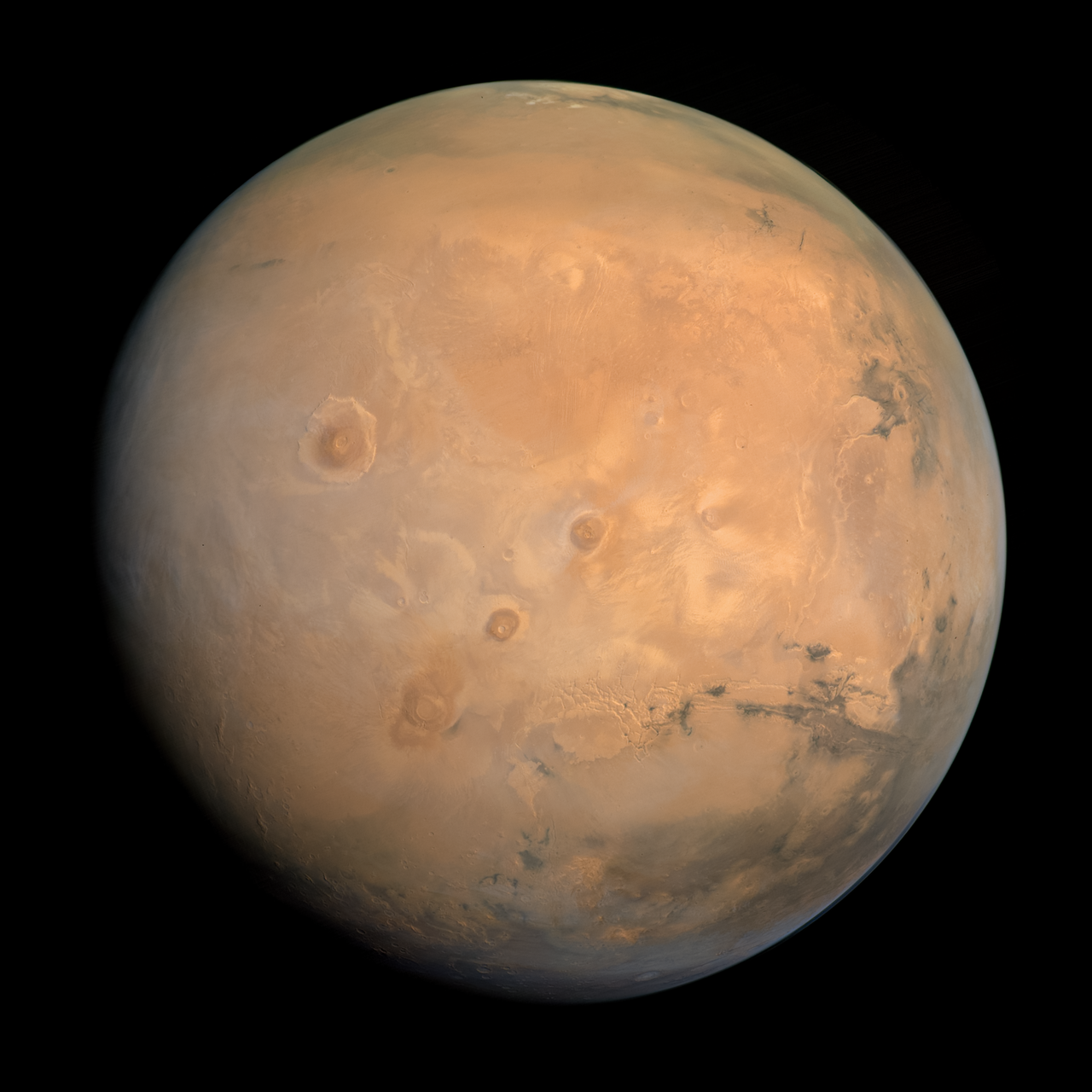
Mars, the celestial neighbor often referred to as the Red Planet, has captivated humanity for millennia. Its distinctive crimson hue, visible even to the naked eye from Earth, sparked ancient tales of war gods and cosmic battles. But beyond the myths and legends lies a profound scientific mystery: how did Mars transform from what appears to have been a potentially life-supporting oasis into the cold, dry desert we observe today? This cosmic metamorphosis raises fundamental questions not just about Mars, but about the very nature of planetary evolution and the possibility of life beyond Earth. From amateur stargazers in tranquil European regions like Lot-et-Garonne to the most advanced observatories, the allure of Mars compels us to seek answers.
For centuries, our understanding of Mars was limited to distant observations. Eighteenth and nineteenth-century astronomers, peering through early telescopes, imagined a world startlingly similar to our own, complete with ice caps, changing seasons, and features misinterpreted as seas and even artificial canals. Some even dared to believe that intelligent civilizations thrived on its surface. However, the relentless march of space exploration has painted a dramatically different, yet no less intriguing, picture.
Today, we know Mars is an incredibly cold and arid world, devoid of a breathable atmosphere and lacking a global magnetic field to shield it from the Sun's harsh radiation. Yet, this wasn't always its reality. A trove of data from numerous space missions has revealed compelling evidence that billions of years ago, liquid water flowed freely across its surface. This suggests periods when Mars could have been remarkably hospitable to life as we know it, making its dramatic transformation all the more perplexing and vital to understand.
From Oasis to Desert: Unraveling Mars's Environmental Catastrophe
The journey of Mars from a potential life-sustaining environment to a desolate landscape is a central puzzle for planetary scientists. Evidence of ancient river valleys, deltas, and vast lakebeds suggests that around 3 to 4 billion years ago, Mars harbored significant amounts of surface water. The presence of water is paramount for life, leading scientists to conclude that Mars was habitable for at least some periods. But a crucial question remains: was Mars consistently warm and wet long enough for life to emerge and evolve, or did it only experience brief, intermittent intervals of habitability?
The prevailing theories for Mars's environmental decline point to a complex interplay of factors, primarily the loss of its protective atmosphere and the decay of its global magnetic field. Without a robust magnetic shield, the solar wind likely stripped away Mars's atmosphere over eons, leading to a dramatic drop in atmospheric pressure and temperature. This process would have caused any surface water to either evaporate into space or freeze solid beneath the surface. The planet's smaller size, compared to Earth, also meant its core cooled faster, potentially leading to the magnetic field's demise. Understanding this catastrophic shift is not just an academic exercise; it offers crucial insights into the fragility of planetary environments and what factors are necessary to sustain life.
The hunt for remnants of this ancient water and signs of past habitability continues with every new mission. Rovers like Curiosity and Perseverance have drilled into Martian rocks, analyzed soil samples, and provided ground-breaking data, helping scientists piece together the planet's hydrological history. These discoveries directly inform our understanding of where life might have once taken hold, or perhaps where it still persists, tucked away in subterranean aquifers shielded from the harsh surface conditions. This ongoing quest for microbial life, past or present, deepens our comprehension of life's potential ubiquity in the cosmos. For a deeper dive into these findings, explore Unveiling Mars: The Quest for Life & Ancient Water Evidence.
Humanity's Relentless Quest: Decades of Martian Exploration
The enduring mystery of Mars has spurred humanity to send more spacecraft to its surface and orbit than to any other planet beyond Earth. The desire to understand its past, present, and future has driven monumental efforts in engineering and scientific innovation. This global endeavor, fueled by curiosity and ambition, spans continents and involves collaboration from countless individuals, whether they're engineers in Houston, scientists in Paris, or students dreaming of space in places like Lot-et-Garonne.
Pioneering Missions and Groundbreaking Discoveries
- Early Attempts and Mariner 4: The 1960s marked the beginning of robotic exploration, with both the United States and the Soviet Union launching probes. After initial failures, NASA achieved a historic milestone in 1965 when its Mariner 4 spacecraft performed the first successful flyby of Mars. It sent back images revealing a barren, cratered landscape, debunking many of the earlier romantic notions of a bustling world.
- Mariner 9's Revelation: Later Mariner missions refined this initial picture. NASA’s Mariner 9, launched in 1971, arrived to find Mars engulfed in a colossal dust storm that obscured almost the entire planet. Patiently waiting for the dust to clear, Mariner 9 then unveiled Valles Marineris, an immense canyon system far larger than Earth's Grand Canyon, stretching thousands of kilometers across the Martian surface. Its subsequent discovery of other dry riverbeds, deltas, and lakebeds provided the first strong indications that liquid water once flowed abundantly on Mars.
- The Viking Landers and the Search for Life: In the mid-1970s, NASA's Viking 1 and Viking 2 landers achieved another first: the successful landing of spacecraft on the Martian surface. Equipped with sophisticated instruments, these probes performed experiments on the Martian soil specifically designed to detect signs of life. While the results were complex and initially debated, they ultimately provided no clear evidence of active biological processes, setting the stage for future missions to delve deeper into the planet's potential for habitability.
Today, multiple missions from various nations are actively operating on or around Mars, continuously collecting invaluable data. Orbiters map its surface and atmosphere, while rovers traverse its terrain, conducting on-site geological and environmental analyses. Each mission adds another piece to the Martian puzzle, incrementally revealing more about its history, composition, and potential to harbor life. This continuous stream of discovery fuels the next great ambition: sending human astronauts to Mars, a goal that hopefully will be realized in the coming decades.
Spotting Mars from Earth: A Celestial Guide
Even without a spacecraft, Mars remains a captivating sight. As the fourth planet from the Sun, it's one of Earth's closest neighbors and often one of the brightest objects in our night sky, surpassed only by Venus and Jupiter. Its unmistakable reddish-orange hue is the key to identifying it. This distinctive color is due to iron oxides (rust) on its surface, which scatter red light. To spot Mars, look to the eastern sky after sunset or the western sky before sunrise, depending on its position in its orbit relative to Earth. Its brightness and steady glow (unlike the twinkling of stars) make it relatively easy to distinguish, offering a personal connection to this distant, mysterious world.
For more detailed information on the history and future of Martian exploration, delve into Exploring Mars: Decades of Missions, Discoveries, and Future Landings.
Conclusion: The Ongoing Quest for Mars's Secrets
Mars stands as a monument to planetary evolution, a stark reminder that worlds can dramatically transform over cosmic timescales. Its journey from a potential watery haven to a cold, dry desert, yet still holding the tantalizing possibility of subsurface life, embodies one of the most profound scientific inquiries of our time. Every data point, every rock sample, and every panoramic image from the Red Planet brings us closer to understanding not only Mars itself, but also the broader conditions under which life can arise and persist. The fascination with Mars is a universal human trait, uniting people across the globe, from the scientific communities of major space-faring nations to the curious minds observing the night sky from a peaceful vantage point in Lot-et-Garonne. As our probes continue to explore its surface and future missions prepare to carry humans, Mars will undoubtedly continue to challenge and inspire us, teaching us invaluable lessons about our place in the universe and whether we are truly alone.